
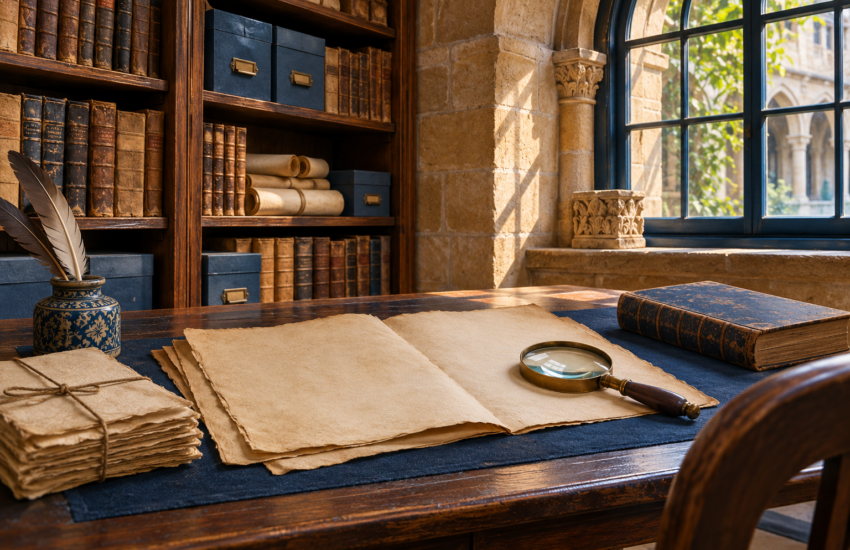
A family memory and a written document can illuminate the same event in different ways. One may preserve an atmosphere or personal consequence, while the other records a date or official description. Neither becomes more useful when the differences between them are hidden.
When recording a recollection, note who is speaking and when the conversation took place. Ask open questions and allow the person to explain uncertainty in their own words. Obtain permission before recording, quoting or publicly identifying someone.

For a document, keep its title, date and source together with your notes. Describe what it says without assuming it answers every surrounding question. If the memory and document disagree, record the disagreement rather than quietly changing one to match the other.
A clear history note can present both accounts and explain what remains unresolved. Readers can then see the evidence rather than only the conclusion. Preserving a difference of perspective is often more valuable than producing a story that appears perfectly seamless.